★★★★★
It helped me and my son better relate to each other, and cleared away uncertainties that had been weighing on my mind.
Parent
Phone no: +1 949-903-8807 or email us: contact@nextgenconsciousmind.com
Children don't always have the words or skills to understand what they're feeling. Through age-appropriate, science-informed coaching, mindfulness, and practical emotional skills, I help children develop greater emotional awareness, regulation, confidence, resilience, and self-awareness.

You may notice your child:
Your child doesn't need to have a 'problem' to benefit from emotional skills.
Emotional awareness, regulation, resilience, and confidence are skills that can be learned, practiced, and strengthened over time.
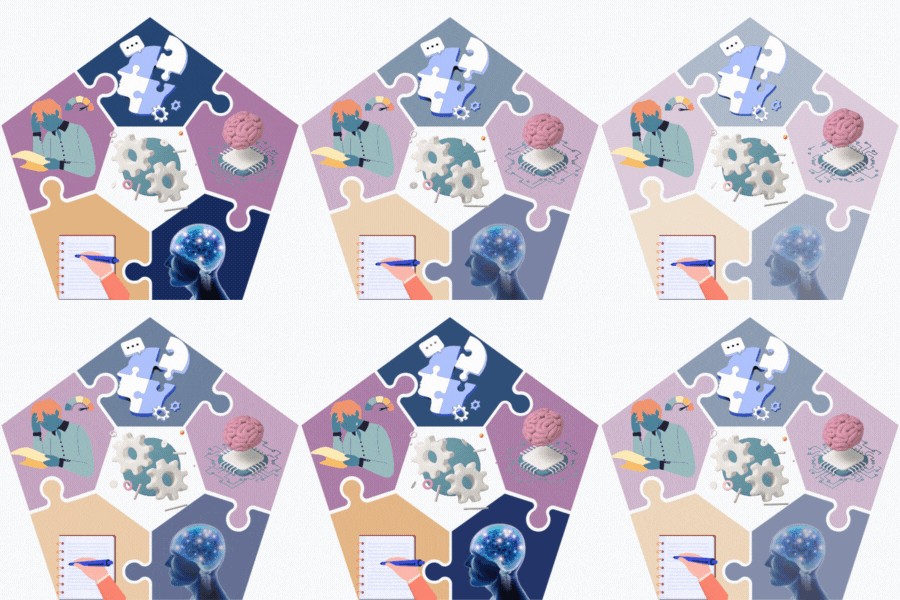
Through personalized coaching, children and teens can develop:
Children don't simply need to be told 'Calm down.' They need to learn how. My approach helps children move through a simple process:
1. NOTICE — “What am I feeling?”
2. UNDERSTAND — “What is happening inside me?”
3. REGULATE — “What can I do when the feeling feels big?”
4. RESPOND — “What choice can I make?”
5. GROW — “What did I learn from this experience?”
The goal isn't to eliminate difficult emotions. It's to help children develop the skills to navigate them.
A seven-year-old and a sixteen-year-old don't learn emotional skills in the same way. Coaching is adapted to the child's:
Depending on the child, coaching may include conversation, reflection, mindfulness, activities, stories, visualization, problem-solving, and other age-appropriate practices. The goal is to make emotional skills understandable, practical, and usable in real life.
Children don't develop emotional skills in isolation. The relationships and environments around them matter. While coaching focuses on helping the child develop their own emotional skills, parent partnership is an important part of the coaching process.
Parents may receive guidance around:
The goal isn't to 'fix' the child. It's to help the child build skills while giving the family tools to support those skills beyond the coaching session.
You want to support your child in:
Every child is different. Coaching begins with understanding your child's unique personality, experiences, strengths, challenges, and needs.
Every child has a different temperament, personality, strengths, and way of experiencing the world. The goal isn't to make children:
Instead, we help them develop the skills to:
We don't aim for children who never struggle. We help children become more capable of navigating struggle.
There is no one-size-fits-all approach to emotional development. Coaching begins with understanding your child's individual needs, strengths, challenges, and goals. Together, we identify the skills that would be most helpful and create opportunities for your child to learn, practice, reflect, and grow.
It helped me and my son better relate to each other, and cleared away uncertainties that had been weighing on my mind.
Parent
So knowledgeable and easy to talk to. So much to learn from her.
Parent & Pediatrician

Conscious Living & Emotional Regulation Coach
I believe children can learn emotional skills that become lifelong strengths—and that the adults around them play an important role in creating the environment where those skills can grow.
Your child doesn't have to navigate every challenge alone. With the right support and opportunities to practice, children can learn to understand their emotions, navigate setbacks, build confidence, and develop greater resilience.
Book a Free Consultation
Let's talk about your child, what you're noticing, and whether emotional skills and resilience coaching may be the right fit for your family.
Please Note: Kids & Teens coaching focuses on emotional skills, personal growth, mindfulness, confidence, and resilience. It is not a substitute for psychotherapy, psychological evaluation, or medical treatment.
Coaching is educational and developmental in nature and is not a substitute for psychotherapy, psychological evaluation, or medical treatment.